Mark Wahlberg has lately come under attack for seeking a pardon in his 1988 racist assault of two Vietnamese men. Much of the criticism has argued that a black man assaulting and maiming two white men in such a way would never have resulted in such a light sentence (45 days in prison) nor been given the opportunity to become a beloved pop star and movie star.
But this criticism strikes me as exactly backward. Even without his philanthropic efforts, whatever you may think of them, Mark Wahlberg is pretty much exactly how you want a violent, racist young person to turn out as an adult: he pays taxes, participates constructively in society, eschews violence, and expresses public regret for his crimes.
Keep in mind that Wahlberg was 16 when he committed his crime: a child, despite our unfortunate tendency these days to try 16-year-olds as adults. He was young and did something stupid and paid a limited price that enabled him to learn that what he did was very wrong while also enabling him to turn into a functional adult.
The core problem with our criminal justice system is that it denies these opportunities to too many of the young people who fall afoul of it -- especially those who are black or Hispanic. Too much of our criminal justice rhetoric is focused on retribution and punishment and shame rather than on rehabilitation and compassion. There are deep cultural reasons for this, going back to America's Puritan roots, and also racist ones, going back to the idea that people of certain races are incorrigible, ineducable, beasts in their essential nature. These ideas help to explain why America has such a high incarceration rate and such dreadful prisons and jails, and why brutal mistreatment and prison rape have been so long tolerated: criminals, according to this logic, deserve all the punishment they receive, including extrajudicial punishment like rape and assault.
We need to move away from this punitive thinking, and we need to avoid the easy outrage that demands that the unfair suffering heaped on black youths be heaped on a white youth too. I would like young violent offenders of all races to have the opportunities Wahlberg has had, and I would like for them, as non-violent adults who have demonstrated their decent citizenship, to be granted forgiveness. If you have served your juvenile sentence and gone on to a productive adult life free of criminality, that ought to be enough. That ought to be the whole point.
Saturday, December 13, 2014

Tuesday, December 9, 2014
The number that matters
There seems to be a high level of frustration in the US today across the political spectrum. The number of Americans who think America is on the wrong track is creeping up toward 70 percent. Democrats are (a little late) trying to show that this view is misguided and that Barack Obama has actually achieved a great deal of success. And they're not entirely wrong.

But there's a key number that's missing from that graph, and it's real median household income.

That number, in real terms, is terrible. It's gone down throughout Obama's presidency, and it has stayed down. It's now at the same level it was in 1995, as it was climbing out of the recession trough that took down George H.W. Bush, made Ross Perot briefly plausible, and beat up Bill Clinton in 1994.
There are some systemic reasons for the decline that go beyond the economics of the moment. The retirement of the baby boomers is likely a factor, though I gather from talking to my parents that a lot of that retirement was involuntary and isn't going very well. And older people are a significant part of the electorate, especially in non-presidential years.
If you wonder how much median income matters, look at this graph of satisfaction over time.

It looks a lot like median income, doesn't it? It bottoms out in the early 90s, climbs steadily through the Clinton years to a wobbly high, starts to fall after 2001, and starts a decline in the 2000s.
There are a lot of complicated economics and statistics and demographics behind median income, including the changing composition of households and much more. But it seems to be a significant factor in the national mood, and it may help explain why many Americans feel that the drop in unemployment and the rise in the Dow is somehow not helping them.
Thursday, November 6, 2014
The myth of Korean anti-Semitism

Do Koreans hate Jews? The Anti-Defamation League has done a world survey, and they've found that South Korea is the third-most anti-Semitic country in Asia, behind Malaysia and Armenia.
But Dave Hazzan at Tablet looks at the ADL's questions and methods and suggests that there might be a few problems with the notion that Koreans are anti-Semites. And I tend to agree.
First, Koreans tend to love Jews, or at least admire them. They see Jews as well educated, smart, financially savvy, media savvy, and powerful, which is how they would like to see themselves. We tend to call that a "dark side" because, whenever in European history anyone has said anything nice about the Jews, it has usually been followed with a call to kill them for whatever success they've had.
But that's not what's happening in Korea.And Jews are a high proportion of Nobel Prize winners, prominent in education, prominent in finance, and prominent in the media industry. This is a thing we talk about all the time amongst ourselves. We're proud of Albert Einstein and Mike Bloomberg and Jerry Seinfeld and Goldwyn and Meyer and lots of other Jews who have excelled. We need to move past the ghetto mentality of assuming that any outside praise is a veiled attack. Just as one can criticize Israel without necessarily being an anti-Semite -- their own members of parliament do it all the time -- one can also praise Jews without necessarily being an anti-Semite.
Second, Hazzan is exactly right about "too much," but could have explained further. In Korean, "too much" (너무) is a modifier like "really" or "totally" in English. It's common to say things like "That food was too delicious!" or "Your girlfriend is too pretty." The implication is not that the food has exceeded a deliciousness limit or that the girlfriend really ought to be uglier. Like "totally," which doesn't always imply actual totality -- "She's totally pretty" doesn't mean I think her toenails and her liver are gorgeous -- "too much" or "too" is often just a strengthening modifier in Korean.
Third, it is drastically absurd to expect Koreans to have the same kind of linguistic care around racism that we do. Their culture and history is different, and so is their language. We make a very big distinction between "There are a lot of really great African-American athletes" and "African-Americans are good at sports." It is, in the American context, a really important distinction. It's also a distinction many Koreans don't quite grasp. Their country had close to zero foreigners in it until the 1890s, and even now it has fewer foreigners than most countries. The proportion of foreign residents is now up to 2%, about half of whom are Chinese. Until the 1990s, few Korean traveled overseas and few foreigners came to live in Korea, so Korean society is relatively new at dealing with issues of race and ethnicity. (There's basically no ethnic variation within Korean society outside of foreigners.)
Finally, we should not do to Koreans what the ADL accuses them of doing to us, which is applying a single perspective across an entire population. Some Koreans are undoubtedly racist. Some are idiots too. Some are well educated and worldly, others are poorly educated and ignorant. Kind of like Americans. Or Jews. You can point to specific incidents of Koreans acting racist -- and the press is very happy to do just that whenever they get a chance, as in the recent case of an Irish job applicant who was rejected because her kind are alcoholics. That case was presented as if "Irish Need Not Apply" signs were on display all over Korea, but they're not.
All of which makes me question the ADL's surveys and methodologies everywhere else. They're an organization committed to fighting anti-Semitism, which means they're an organization committed to the widespread existence of anti-Semitism. One should be very careful about taking these kinds of surveys at face value. Like global happiness surveys or measures of what people care about, they often fail to take into account local cultural variations (Which cultures like to complain while happy? Which like to say they're happy when they're miserable?) and come up with results that are facile at best, grossly misleading at worst.
Saturday, November 1, 2014
The architecture of social change
In reading Laurel Kendall's The Life and Hard Times of a Korean Shaman, I was struck by a passage describing a cramped, dim inner courtyard that approximated the larger, brighter courtyards of traditional Korean home. This was in the 1970s, in the then-modern home of a shaman who lived in the not-quite-countryside on the outskirts of Seoul.
It got me to thinking about how architecture incorporated, modified or discarded aspects of traditional housing as Koreans made the rapid transition from mostly rural villages with thatched-roof homes to mostly urban, stacked apartment towers. Early attempts at modern homes kept some semblance of the traditional courtyard spaces, but these seem to have disappeared as Koreans moved to what they call villas -- small brick apartment buildings -- and then the larger apartment towers that have become so common. Under-floor heating, for example, seems to have been maintained in the transition to villas, but I don't know about the more modern apartments. Sliding doors were also common in older buildings. And entrances to apartments had a recessed area for shoes, approximating the step up to a traditional house's platform.
There's a paper to be written about this, or perhaps a book. Maybe someone has already done it. There's comparative work to be done on China and Japan at the very least. And I'm not going to do any of that. But if it strikes your fancy, maybe it can become your research project.
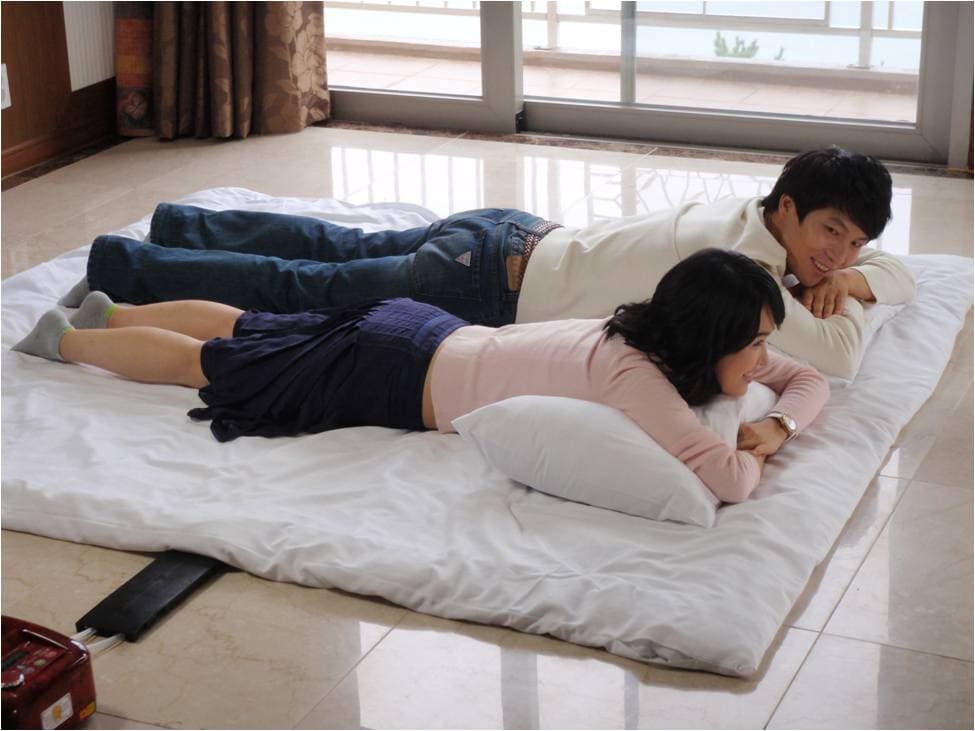 |
| A DIY under-floor heating system. |
There's a paper to be written about this, or perhaps a book. Maybe someone has already done it. There's comparative work to be done on China and Japan at the very least. And I'm not going to do any of that. But if it strikes your fancy, maybe it can become your research project.
Friday, October 31, 2014
TimeWarner travails

Initiating the process
One day, out of the blue, my modem reset. This isn't exactly as rare an event as it should be, but it's never good. When it finished rebooting, I had some brief trouble accessing the Internet, until Time Warner redirected me to a webpage where they told me that my modem was out of date and took me through the process of ordering a new one.
The good:
- This is the first time ever that Time Warner has proactively let me know that my equipment was out of date, rather than waiting until it began to cause problems, and then sending a technician to say, "Oh, this box is really old!"
- The ordering process was remarkably simple, and the new modem showed up in just a few days.
The bad:
- There has got to be a better way to send push notifications than by unceremoniously turning off my Internet.
Grade: B+
Installation and setup
Here's where it got hinky. I plugged in the modem, which replaces my Wi-Fi router, connected it to the cable line, et voila, I was able to get onto the new modem's Wi-Fi, sign in to the config page, and change the name and password of the Wi-Fi network.
According to the manual that came with the modem, the next thing that would happen is that I'd get taken to a page to initialize the modem. And I got taken to a page ... with a 404.
I went back to my old modem because I was busy and wanted to use the Internet. A few days later I gave it another try, with the same result. I called the dedicated support line for modem installation issues, and through the automated system I was able to ask that the modem be initialized. The call ended, the modem reset, and I was online! I was about to go to Ookla Speedtest to see how fast my new "ultrafast" modem really was, and then ... nothing. I checked the modem, and the Wi-Fi lights were off.
Time to call Time Warner again. After the phone tree and maybe 10 minutes on hold, I spoke to a friendly technician who explained that Wi-Fi was not enabled for my account because my old modem didn't have any. That makes a certain amount of sense, except that Time Warner knew they were sending me a Wi-Fi modem, right? It seems that part of that process could've been enabling my account for Wi-Fi.
Once I got the modem running, it was fast. Like, 100 Mbps fast. Good stuff!
The good:
- Time Warner provided a dedicated number for modem issues, making it easier than the usual torture to get through the phone tree. And the initialization process was automated, which was smart.
- Fast Internet!
The bad:
- The manual said something would come up that didn't come up.
- Wi-Fi is something that needed to be enabled for my account and wasn't, and it took a phone call to make that happen.
Grade: C-
Fixing the inevitable problem
This morning I was happily using my very fast new modem, when suddenly the thing rebooted. When it came back on, my Wi-Fi network was gone. It had reverted to the default network, which was the serial number on the bottom of the box, and for which I didn't have the password. Another call, another long wait.
Finally I got a technician, who'd never heard of such a thing happening and quickly passed me on to a supervisor (or, rather, to a period of hold music, followed by a supervisor). The supervisor had also never heard of such a thing, but gave me the password to get me on the modem again, and I was able to get back in and set up my Wi-Fi network with my own name and password.
The good:
- The problem was pretty quickly solved.
The bad:
- I have a brand new product that has done something inexplicable and problematic, and the technicians had never heard of it. Doesn't exactly build confidence. Hopefully my Wi-Fi network will still be there when I get home, but who knows?
Grade: B
Overall grade: C+
Which, for Time Warner, is a remarkable improvement over every other experience.
Wednesday, October 22, 2014
Freedom is a pretty strange thing

Freedom is a pretty strange thing. Once you've experienced it, it remains in your heart, and no one can take it away. Then, as an individual, you can be more powerful than a whole country. -Ai WeiweiRight now, Liberty in North Korea is raising funds to rescue 200 North Korean refugees. That might seem like small potatoes against the daunting power of the North Korean state. But I'm gonna go with Ai: freedom is a pretty strange thing.
Last night, at a fundraiser, I spoke for a long time with Joseph Kim. He's a sweet kid. We talked about North Korea, and we talked about Max Weber and sandwiches and cheap ways to travel. His English is better than it was the first time I met him, and he's studying hard in school.
He's just one individual with freedom in his heart. And it makes him powerful. It's voices like Joseph Kim and Ai Weiwei that the dictators of this world fear most: people who speak the plain truth.
And it's not that they speak without fear. In Ai Weiwei: Never Sorry, the documentary where Ai spoke about freedom, he admits that he's afraid -- maybe more afraid than most other people, which is why he realizes that he must speak now. He sees the danger of not speaking.
LiNK is working hard to bring 200 more Josephs to freedom. They won't all do TED talks. Many may choose not to be activists at all -- but choice is exactly the point. Given the resources and opportunities of freedom, North Korean defectors might open a kimbap stand together on the outskirts of Seoul, like the mother of a defector friend of mine and a few other defectors. Or they might get degrees in political science at one of Seoul's top universities, like someone else I know.
But their acts of freedom, large and small, have an impact. They change the way the world sees North Korea and North Koreans. And many North Korean defectors remain in contact with their families back home, sending them money, sending them information -- and planting the experience of freedom in their hearts.
If this matters to you, now is an especially good time to give because your funds will be matched. Even small donations make a difference -- most of LiNK's 265 rescues to date have been funded through the efforts of college students who've done things like bake sales. Sometimes it can make a difference just to talk to the people around you. Whatever you can do to give the experience of freedom to others, on this issue or somewhere else, please do it. Once you've experienced it, it remains in your heart, and no one can take it away.
Monday, October 20, 2014
Smiles and gunfire

One of the most common misunderstandings in international relations is the belief that nation-states act like coherent individuals. People say things like "North Korea wants engagement" or "The United States has shifted its focus to Iraq" or, as I did above, "South Korea was happy to accept," as if these countries were individual people.
Now, you could question whether even individual people act coherently all the time. But when it comes to large nations whose governments comprise thousands and thousands of people, it shouldn't be strange that some of these people are working at cross purposes, or simply don't know about each other's intentions. In democracies, these variations are made explicit. We have presidents and legislators and appointed officials from different parties, and we have layers of government at the local, regional and national level. Politicians openly debate with each other.
In dictatorships, however, disagreements are hidden, as is so much else about how government works. It's easy to believe that in a totalitarian state like North Korea, everything flows from the leader, and all government actions are under his control. But the reality is more complex. First of all, it isn't always clear what the leader wants, and in fact dictators are often cagey about how much they reveal of their intentions. It isn't just the outside world that has to struggle to parse Kim Jong-un's intentions. North Korean officials have to take actions and make decisions based on cryptic instructions, or none at all, and they can face dire consequences if they guess wrong.
Second, we need to remember that information flows less effectively in dictatorships than in democracies. Totalitarianism is not the same as efficiency. Totalitarian states expend enormous effort to limit the flow of information, and that very much includes the flow of information within the middle levels of government. The top leadership must ensure that no individual or group is able to organize sufficiently to be a threat. That means siloing leaders and siloing information. Any system of information distribution that would allow a high-level minister to call a mass of people to action -- the banality of a foreign minister sending a general memo to the full staff of the Ministry of Foreign Affairs -- is a danger to the leader. The leader needs multiple paths of information that lead to him, and he needs to limit the ability of those below him to share information widely.
So what does all this mean in terms of the gunfire at the border? Possibly nothing much. Peace talks, after all, do tend to happen in the context of conflict, and that's what's going on in Korea. The exchanges of fire, which led to no casualties, had to do first with North Koreans trying to shoot down balloons sent over the border by South Korean private citizens, and later with South Koreans warning North Korean soldiers not to move any closer to the demarcation line. Who ordered the North Koreans to fire at the balloons? Quite possibly a low-level border officer who knows absolutely nothing about the recent high-level exchanges with South Korea. Who ordered the South Koreans to shoot back? Probably a South Korean officer with standing orders to do exactly that, and whose orders don't change because of the vague possibility of a thaw at the highest levels of his government. And why did the North Korean soldiers approach the demarcation line when they did? Who knows? But it strikes me as exceedingly unlikely that they did so as part of some kind of clever cat-and-mouse game ordered up by Pyongyang. Instead, like so much else from North Korea, it's probably just noise.
Friday, October 3, 2014
Religion words

For those who know their way around East Asian religious studies, it seems like an uncontroversial statement. But the deeper I get, the more it seems fundamentally incorrect. Two terms seem especially problematic (though you could quibble about pretty much all of them): worship and gods.
We can start with the latter. According to Myron Cohen, scholars of Chinese religion decided to reclaim the term "god" from the Judeo-Christian context in which it was most often used. And there are ways in which the Chinese gods resemble the gods of India or classical Greece and Rome. But the differences loom large. "Gods" can be both guei and shen, or (for lack of better terms) ghosts and spirits, although my ancestors might be your ghosts and vice versa.
But East Asians don't necessarily treat their "gods" with the kind of respect and veneration -- in a word, worship -- that a Westerner might expect. When a local god wouldn't provide rain, officials were known to take it out and leave it in a hot field to suffer, thrash it with sticks, even smash it if no rain came. You can't do that to Yahweh or Jesus or Allah, or even Zeus or Odin, although maybe you could with some minor god.
And from the problem with gods, we can see the problem with worship. Even if we set aside such cases of spirit abuse, more orthodox ancestor veneration or propitiation is simply not the same as what we usually think of as worship. For one thing, ancestor rituals very closely resemble the respect paid to living ancestors, and no one thinks East Asians are actually worshipping their living parents or grandparents. If your dead parent is being fed and bowed to the same way he was when he was alive (with minor differences), why is it now worship? Care or propitiation or veneration seem like better terms.
It is never easy to find the right balance between translation and obscurity. To say that Koreans engage in god and ancestor worship and that shamans perform exorcisms is misleading in all sorts of ways, but to say that Koreans perform kut and chesa for shin and gajok is difficult for the layperson. I haven't got a satisfactory solution to this problem, but I think it's worth noticing that the problem is there.
Monday, September 29, 2014
The private-self fallacy

There's a moment during The Roosevelts where FDR, now president and nearing the end of his second term, has returned home to Campobello for the first time since he was stricken with polio there. He's sitting alone outdoors in an unguarded moment when some neighbors pass by, finding him with his head in his hands, a sorrowful expression on his face. In a moment, the look is replaced by Roosevelt's usual broad smile and good cheer. As the commentary puts it, "The mask was back on."
I immediately recalled a similar trope in Ken Burns's Jazz, this time about Louis Armstrong, another man who was intensely public, surrounded by people, and whose persona was one of ceaseless good cheer. Someone catches Satchmo in a private moment looking like he has all the sorrows in the world, and then the moment passes and he's back to his usual grinning self.
The way these scenes are presented, we are to understand that there are two selves, a public self and a private self, and that the private self is more authentic than the public self. We tend to believe that this is true, especially about public figures. It's rooted in a Freudian view of the mind, in which one's true self is hidden and covered over: repressed. What is shown is false; what is hidden is true. And this Freudian conception of the mind may go back even further to the idea of an immortal soul whose moral strengths and weaknesses are known to God, regardless of what you might have kept hidden from your fellows.
But is all of this really true? Is the FDR with his head in his hands the real FDR, and the smiling, social FDR a false front? One way to test this assumption is to consider your own experience. Think about a moment when you were sad -- ideally, when you were sad and alone -- and then you spoke to someone, maybe someone close to you, like a good friend or a partner, and you immediately felt better. Was your sorrow more authentic or real than your cheering up? Or was the cheering up just as real as the sadness that preceded it? Maybe FDR and Satchmo were authentically tired and sad in moments, and also authentically loved people in a way that made them instantly cheerful when they had someone to talk to and fool around with.
There's a reason why programs like Alcoholics Anonymous and Landmark Education emphasize talking to others. When we're alone, we're more likely to be lost in our own miseries. Talking to others, engaging them, brings us out of ourselves and into the world. We are intensely social creatures, and being with others tends to cheer us up -- especially if we're helping others instead of dwelling on our own problems.
That happiness and relief isn't false. In fact, the social self might be more genuine than our private sorrows. After all, the sorrows live in our heads, while the social self is at play in the real world. Rather than a secretly sad Franklin Roosevelt and Louis Armstrong, what we probably had were an occasionally sad but mostly gregarious and energetic FDR and Louie, whose constant action and engagement with the world made them, and us, happier people altogether.
Sunday, September 14, 2014
Maximum minimalism

Minimalism is not exactly new to me. My grandmother was an avid listener of New Sounds on WNYC, so when I lived with her I got exposed to John Schaefer's taste for Arvo Part, Alvin Lucier, Brian Eno (particularly My Life in the Bush of Ghosts), and the like. Nevertheless, I'd somehow never seen an actual performance of minimalist music, which is quite different from hearing it on recordings. (I might have missed this chance too, but my girlfriend is an artist who does things like 18-minute videos of lighting and shaking out matches, and she bought the tickets as soon as they went on sale.)
There's a tendency, when listening to minimalism, to let it fade into the background. In my grandmother's case, evenings of Terry Riley and John Adams served as a backdrop for reading The New York Review of Books or doing the New York Times crossword puzzle. A concert hall forces you into a different relationship with the performers and the music, even if you do let your mind wander (I did). And there is a theatricality to the performance of these demanding works -- particularly the two pieces by Reich, Four Organs and Drumming. The former involved a surprising amount of headbanging and hand-waving by the musician leading the ensemble, while the former became almost a stark sort of Blue Man Group Goes to Indonesia mix of precision ensemble percussion and peculiar walking about. After the intermission, Philip Glass's gaudy pieces felt positively lush by comparison.
Part of the charm of seeing these works performed live is recognizing both their influence and their anachronism. Steve Reich's work in particular, going back to It's Gonna Rain from 1965, prefigures so much of hip hop and everything after (Jamie xx and Gil Scott Heron, anyone?) that it's almost impossible to imagine how weird it must have sounded when it was new. And I kept thinking of Suicide (the band, not the act) during Four Organs. But nobody today would think to phase two drum patterns, or three or four of them, by actually making musicians do it live on a stage. What was a necessity is now a stunt, a kind of artistic equivalent to having Rain Man do arithmetic really fast. There were wires and cables all over the stage for the electric organ amps, but no one had a MacBook, or even a Korg or a Moog. Contrast that with the enormous sound St. Vincent can produce with just four musicians (but at least two onstage computers), in a performance that owes a great deal to minimalism both musically and visually.
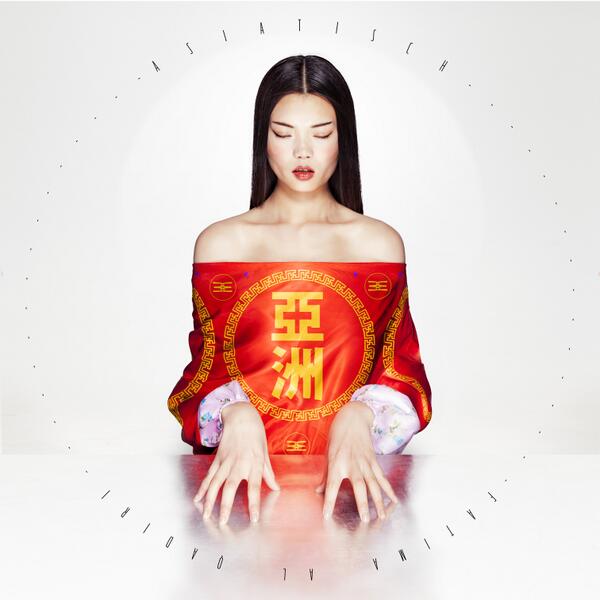
Even more fascinating, in its way, is what happens when you tell Google Play to create a radio station based on Asiatisch. What it plays is a genre I'm calling dishwasher beats. Last night we put it on while the dishwasher was running, and it was sometimes hard to tell which noises were from the kitchen and which from the stereo. Artists like Emptyset, Rashad Becker, Millie & Andrea, Andy Stott, and Logos make stark music that pulls together strains of minimalism, industrial, Detroit techno and noise rock to make background music for a post-industrial wasteland. (The album covers alone deserve some kind of genre designation; you can tell as soon as a track starts whether it'll be genuine dishwasher beats by whether the cover looks properly abstract and art school. If the cover isn't abstract or stark-black-and-white enough, you might find yourself with something actually danceable).
There is, as yet, no good way to share Google Play radio stations, so go try it out. It's the music of a generation that has grown up with Kraftwerk and Steve Reich far in the past and dishwashers all around.
Wednesday, September 10, 2014
Why were you born?
At my birthday party, a dear friend taught me a Korean version of "Happy Birthday" with the following lyrics:
왜 태어났니?
왜 태어났니?
얼굴도 못생긴 게
왜 태어났니?
Why were you born?
Why were you born?
Also your face is ugly
Why were you born?
The playful humiliation seems like an especially Korean way of celebrating a milestone, and I find that this is particularly appropriate, lyrically, on my kid sister's birthday (yes, you will always be my kid sister), which is two days after mine because she will never, ever catch up to me!
The New York Philharmonic of dinner
On Monday night I had my first dining experience at a Michelin 3-star restaurant. For my fortieth birthday, I chose to celebrate with the summer tasting menu at Jean-Georges.
To me, it felt like the New York Philharmonic of dinners, or like riding in a Rolls-Royce. All of the food and all of the service was precise, elegant, choreographed. Each dish was excellent, well composed, assembled from the finest ingredients, presented beautifully. A birthday cake showed up at the end with my name and age written in chocolate.
It was, all in all, an exquisite experience, but maybe not my favorite kind of food experience. Like the Philharmonic, it's a cultural event that feels fancy and unfolds over a couple of hours and is satisfying, where everything is right and there are charming moments and even surprising moments, but never anything really shocking or unexpected.
So the thing is, the New York Philharmonic is not my favorite musical experience. I am glad to have gone to the symphony a number of times, and to have grown up with regular visits to the San Francisco Phil. A couple of years ago, a night of Hungarian music at Avery Fisher was moving enough that it inspired me to go to Budapest and Vienna. But you know what I like more? A hot, sweaty night at a small club with a band that blows your mind with a groove you can't stop dancing to. Antibalas in Fort Greene Park, or Primus at the Warfield, or 25,000 people jumping up and down and screaming, "FUCK YOU, I WON'T DO WHATCHA TELL ME!" in unison for the cause of Tibetan freedom. Or else some music from the other side of the world that expands my whole conception of what music can be, like my first all-night concert of classical Indian music, or hearing gamelan and Kechak for the first time, or Tuvan throat singing.
And food-wise, it's pretty much the same thing. My birthday meal was incredible, and I'm glad I've had the experience. But I think I get more excited about discovering, say, Tajik food in Sheepshead Bay, or the crispy eel at Nice Green Bo Restaurant in Chinatown. Still, for my fortieth birthday, Jean-Georges was just right: indulgent, graceful, luxurious. Life is full of bumps and ruffles, and most of the time I love the excitement and the mess. But it's nice to know that as I enter my fifth decade, once in a while I can take the time to enjoy perfection.
 |
It was, all in all, an exquisite experience, but maybe not my favorite kind of food experience. Like the Philharmonic, it's a cultural event that feels fancy and unfolds over a couple of hours and is satisfying, where everything is right and there are charming moments and even surprising moments, but never anything really shocking or unexpected.
So the thing is, the New York Philharmonic is not my favorite musical experience. I am glad to have gone to the symphony a number of times, and to have grown up with regular visits to the San Francisco Phil. A couple of years ago, a night of Hungarian music at Avery Fisher was moving enough that it inspired me to go to Budapest and Vienna. But you know what I like more? A hot, sweaty night at a small club with a band that blows your mind with a groove you can't stop dancing to. Antibalas in Fort Greene Park, or Primus at the Warfield, or 25,000 people jumping up and down and screaming, "FUCK YOU, I WON'T DO WHATCHA TELL ME!" in unison for the cause of Tibetan freedom. Or else some music from the other side of the world that expands my whole conception of what music can be, like my first all-night concert of classical Indian music, or hearing gamelan and Kechak for the first time, or Tuvan throat singing.
And food-wise, it's pretty much the same thing. My birthday meal was incredible, and I'm glad I've had the experience. But I think I get more excited about discovering, say, Tajik food in Sheepshead Bay, or the crispy eel at Nice Green Bo Restaurant in Chinatown. Still, for my fortieth birthday, Jean-Georges was just right: indulgent, graceful, luxurious. Life is full of bumps and ruffles, and most of the time I love the excitement and the mess. But it's nice to know that as I enter my fifth decade, once in a while I can take the time to enjoy perfection.
Monday, September 8, 2014
Forty years later
I turn forty today. It's a big birthday, very midlifey, a time of a certain amount of angst, a certain amount of reflection. I could try to sum it all up, write a list of accomplishments or things I'm proudest of, but inevitably that becomes covertly a list of all the things I haven't accomplished and am least proud of. And that's not much fun. Besides which, the big things I've done in my life -- working at Google, graduating from Columbia University, buying a house, getting married, getting unmarried, getting sober, traveling -- are things that lots of people have done.
Instead of all that, here is a list of moments, experiences, quirks and flotsam that make me who I am. Instead of a greatest hits compilation that has all the songs you've heard a million times, this is that extra disc in the box set that has the b-sides and outtakes and poorly recorded live cuts. So here goes.
Instead of all that, here is a list of moments, experiences, quirks and flotsam that make me who I am. Instead of a greatest hits compilation that has all the songs you've heard a million times, this is that extra disc in the box set that has the b-sides and outtakes and poorly recorded live cuts. So here goes.
- When I was about four, my dad handed me the lid to the cookie jar. He thought I had it, I thought he had it, it crashed to the floor. I was startled and terribly upset and started to sob. My father told me everything was OK.
- In nursery school, I once forgot how to walk and could only march or run. This lasted for several days. Another time, I found myself wondering what would happen if I rode a tricycle at full speed into the side of the sandbox. I knew I couldn't keep moving forward, but I also thought it seemed wrong that I would just suddenly stop. I did the experiment and discovered that the trike stops but I keep going, right over the handlebars, and scrape up my face so badly on the big hard tire that I can't whistle for two weeks afterward.
- I know how to Korean dance. And swing dance. I am an award-winning Korean dancer.
- I've had some weird temp jobs. Once I did data entry for a week on a gambling boat while it was in port. The Filipino crew weren't allowed off the boat for visa reasons, so they hung around watching the same Bon Jovi concert video over and over.
- As a teenager, I had a fling with an ex-Soviet Russian scientist from a newly formed Central Asian state.
- Once, the muezzin of the Taj Mahal, after giving the call to prayer, tried to sell me toilet paper.
- I once spent the night at the Pairothapla Hilton (Pairothampla means landslide in Nepali), which had goat's blood handprints on the doors to the rooms. I do not believe it was formally affiliated with the international chain of luxury hotels.
- I have a brother. He's alive today because I reached into his throat and took out a piece of apple skin he was choking on. I'm not sure he knows about that.
- The most countries I've ever been in with another person (excluding the US) is four: Korea, Hong Kong, Nepal and India with my ex-wife, and France, Mexico, Ghana and Israel with my sister.
- I remember when the Internet was made entirely out of text (1993). I remember dial tones and busy signals. I know the sound of a tone arm lifting at the end of a side. I have lost Legos in shag carpet. I have ridden in station wagons with fake wood paneling. I remember Pac-Man when it was new. Not Pong though. I'm not old. Seriously.
- The highest I have ever been is about 12,400 feet, at Muktinath in the Annapurna region of Nepal. At that elevation, I felt stupid and sluggish.
- The highest I have ever been was after drinking a bhang lassi in Pushkar, India. At that elevation, I felt stupid and sluggish.
- I speak Korean well enough to have made some bizarre mistakes. Once I pointed to a rabbit and said, "Hey, it's a demon!" Another time I invited a girl back to my place to look at my phone.
- I didn't go to a single high school dance, and I only attended one sporting event, briefly, to meet a friend who had to be there because he was in band. I did go to the dances at summer camp, though, which is where I met my first girlfriend. We slow-danced to "Stairway to Heaven."
- My first car was my dad's old Toyota Corona, which I had painted black and upgraded with a better stereo (cassette deck, of course). It caught fire early on New Year's Day, after I'd dropped off a friend on the way home from a concert.
- I've only ever had three cars: two Toyotas and a Honda. I've had more bikes than that. I've never owned a skateboard.
- Sometimes in high school I would drive up to the parking lot blasting Chinese opera, just to mess with the dudes who would drive up blasting rap. Sometimes I would detune my acoustic guitar to play Lady Sniff in the Denny's parking lot.
- Once, outside Covelo, California, some friends and I stood in the middle of a river and smoked a bowl so that we could tell people we'd stood in the middle of a river and smoked a bowl. So now I'm telling you. Mission accomplished.
- Google is the job I've held the longest. The shortest was Yes! Burgers and Malts at the Northgate Mall in Marin County, California. When I quit on my third day, my manager -- Patty, seriously -- warned me that if I didn't give two weeks' notice, I wouldn't get references. I've done OK though.
- I have always had a rich fantasy life. I've also always had a pretty strong sense of the difference between fantasy and reality. I liked to play army and dress up in a camo uniform, and one time my mom took me to a Marine recruiting station to get me some patches. The recruiter asked if I wanted to be a Marine someday. "Oh no," I told him. "It's very dangerous. You could get hurt or killed."
- I grew up pretty free-range. I used to walk all over my neighborhood, down into the creek, and up into the surrounding hills when I was a kid. When I was old enough to do it, I rode my bike to the movie theater and the mall. I managed all this without a helmet. I fell down many times, and because I was by myself, I had to get back up again. If I'd been seriously hurt, I would've yelled, and someone would've found me. But I was never seriously hurt. I ate a lot of blackberries though.
- I've lived in Lucas Valley, California; Morningside Heights, Manhattan; the Upper West Side; Forest Hills, Queens; Seoksu 3dong, Gyeonggi-do, Korea; Gowanus, Brooklyn; Carroll Gardens, Brooklyn; Bay Ridge, Brooklyn; and Brooklyn Heights.
- My first computer was a Commodore 64.
- I worked at Starbucks in Manhattan the summer the Frappuccino was introduced. Try one with a shot of raspberry syrup, but not if there's a long line behind you.
- My first word was "dog." Probably pretty soon after that I learned to say "dumb dog." That was our dog's name. (Her other name was Joplin.)
- After I graduated from college, I lived with my grandparents for a couple of years in their book-lined Upper West Side apartment. It was vexing and grand. That was the same apartment I used to visit as a teenager. I came once with my friend Joey, and we shot bottle rockets attached to paper airplanes out the 8th-floor window during a thunderstorm. We also saw Danzig and Soundgarden at the Beacon Theater and got terribly sick with neck pains that resembled meningitis but were not meningitis. My grandparents' weird old doctor wrote a prescription slip for Gatorade, and our grandparents forced copious quantities of the stuff on us.
- Among the things I have learned how to do and then forgotten: play the violin, speak Spanish, shoplift vinyl records from the mall, walk from Thamel to Durbar Square via Tahiti Tole, solve quadratic equations, ride Muni, use PageMaker, program in Logo, recite all of Bottom's lines in Midsummer Night's Dream, win Super Mario Bros. Among the things I have learned how to do but not done in a while but still mostly remember how to do: play guitar and harmonica, drive stick (in San Francisco, too), set up a tent, throw a football, say no in Hindi, write a keyhole essay, solve a sudoku, work an ATM entirely in Korean (the top choice is always withdrawal).
- In college I took a class on Native American literature with Karl Kroeber, who claimed not to understand Native American literature. I figured that if this guy who'd been studying it his whole life still didn't get it, what chance would I have during a single semester? I think I got a B. The best thing I learned in college was that I didn't know anything about anything. Somewhere in my late thirties, I felt like I finally knew a little something about something, and now I'm getting a master's degree in it.
Sunday, September 7, 2014
Supernatural

But there is another term that creeps in, particularly in his discussion of Confucius and whether the ancient sage could be considered "agnostic" in terms of beliefs in gods and spirits. That term is supernatural.
There are, of course, other troubling terms -- "gods," for one -- but supernatural is a term that I have seen frequently in texts on religion, and it's problematic for a number of reasons. At its core, it means above nature, which suggests phenomena that don't follow any natural order. But historically the study of what we call supernatural phenomena -- spirits, gods, magic -- was not considered beyond the realm of the knowable. It was hard to know, and only wise scholars or profound mystics who devoted a great deal of study could truly understand these things, but that's pretty much how we think about physics today. Do you really know what goes on inside your smartphone? Or inside a particle accelerator?
So when we talk about a Korean shaman who feels herself to be possessed by different spirits, and who dances and "plays well" with them, and prescribes the right sacrifices to keep them happy, are we really talking about something that, from the shaman's perspective, transcends the laws of nature? Or are we talking about an extension of nature -- of how the world works -- that isn't normally visible, but that is discernible with study and insight? And if the latter, is the term supernatural merely an imposition of a Western scientific episteme anachronistically and aculturally onto other worldviews?
To demonstrate the awkwardness of supernatural as a category, let's think ourselves back into history, say, five hundred years. And now we will consider a series of beings in whose existence a Chinese scholar might believe, though he has never seen any of them: elephants, yetis, dragons, gods, the ghosts of ancestors, Heaven, giraffes, Indian people, qilin. Which of these is a belief in the supernatural? From the scholar's perspective, every single item on the list can have manifest, measurable impacts on the visible, physical world. Some can't be directly seen, but neither can radio waves, and they're not supernatural in our thinking. They are a part of nature, amenable to study, manipulable by various means -- like gods, spirits, etc.
As such, an enquiry into whether Confucius himself believed in the supernatural seems to me fundamentally misguided. One might enquire whether he believed in particular sorts of gods or spirits, and what his beliefs were about those beings. But the very idea of the supernatural depends on a modern distinction between a realm of superstition and falsehood and a realm of empirically measurable truth: science, in a word. (Ironically, many of the scholars who formulated this distinction would have found it absurdly superstitious to believe that a dead general could become an intercessionary god, yet believed profoundly in the redemptive power of the death and subsequent resurrection of a man who was born to a virgin mother and whose father was the God of Heaven. One man's superstition is another man's truth about the world.)
We might need a replacement term for the realm of spirits, or we might not. But it seems to me that supernatural is decidedly not the right word to use for scholars and practitioners who engage directly with that realm, based on knowledge, insight and experience.
Saturday, September 6, 2014
Godzilla vs. Kim Jong-il
I have never actually watched Pulgasari -- I need to get to it one of these days -- but the story of the making of Pulgasari is one of the very weirdest tales in all of cinema. In 1978, North Korean agents kidnapped the Korean actress Choi Eun-hee in Hong Kong. Her ex-husband, the prominent director Shin Sang-ok, went to Hong Kong to investigate and was promptly kidnapped as well.
The kidnappings were the work of Kim Jong-il, whose father, Kim Il-sung, was then still the leader of North Korea. It took several years, and Shin spent some time in North Korean prison, but in 1983 he was reunited with his ex-wife in Pyongyang. Under pressure from Kim Jong-il, they remarried. From then until their eventual escape in 1986 at a film festival in Vienna, Shin worked on North Korean films, the most famous of which is Pulgasari.
The aftermath is almost as weird. Shin and Choi escaped to the US embassy, and they were granted asylum. Back then, South Korea was under the right-wing military dictatorship of Chun Doo-hwan, and Shin feared that the government wouldn't buy his kidnapping story, so he stayed in the US until 1994, when the politics in South Korea had changed. He eventually died of hepatitis, supposedly while working on Genghis Khan, a musical, which sounds like an Asian Springtime for Hitler.
The full Pulgasari film, with subtitles, is available on YouTube.
Thursday, September 4, 2014
The role of government
It never fails to astonish me that the same conservatives who argue that every last aspect of big government is irreparably broken and corrupt inevitably see a capital punishment system that is perfect and just. If you genuinely believe that the state can’t even fix a pothole without self-dealing and corruption, how is it possible to imagine that police departments and prosecutors’ offices are beyond suspicion?So asks an excellent Slate article about two mentally retarded teenagers who were falsely convicted of murder and have just been released, 30 years later. One could ask the same question about the military, which most conservatives also believe ought to be run by the state and properly funded.
And liberals like myself ought to ask ourselves carefully why we think a government that so badly mishandles justice ought to be trusted with our health care or our environmental protection. The same self-dealing and corruption that leads to false convictions and unnecessary military hardware might also lead to unfair over-regulation or mishandling of patient care.
These aren't questions with easy answers. They're questions we need to keep asking and asking. That's pretty much the whole point of a democracy with a free press.

Goryeo and the construction of tradition

Deuchler's scholarship is admirable. She's obviously put tremendous effort into reading a ton of Goryeo documents, and it's not like they're nicely indexed to let you know when they're going to start talking about marriage laws. Reading them is presumably difficult, since it means reading Koreanized medieval Chinese as preserved in some very old hand-written books. Furthermore, the existing evidence is almost entirely for the upper classes, as it is for Heian Japan (784-1195) around the same time, so we have to make do with a limited picture of the upper echelons of society.
What Deuchler finds is interesting. Though the evidence is fragmentary, it appears that women had far more power in Goryeo than in later Joseon, just as they did in Heian Japan and in Tang China (618-907). That is not to say that they were equal to men or that there was anything like a patriarchy. But inheritance laws meant that estates were divided at the discretion of their owners, and it seems that they were customarily split evenly among both sons and daughters. Matrilineal prestige was important in claiming oneself as an aristocrat, and men often moved in with their wives' families rather than vice versa. There also seems to have been a lot of what we would consider incest: marriages with cousins, even with half-siblings, which kept wealth contained in a tightly knit family unit.
There are two points that I want to make about all this. The first is about shamanism, where some theorists have claimed that shamans were probably men in an earlier period, and only later shifted to women when shamanic practice became disparaged. I find this idea unlikely, and there's little evidence for it. It seems far more likely to me that shamanism became a less diffuse, more specifically identified set of practices only when it was distinguished as heterodoxy, but that shamanic practices probably went on long before, and probably had plenty of female practitioners.
Secondly, the evidence about Goryeo and how different it was -- and about Heian too -- should remind us that "traditional" culture is generally a modern invention, developed in contradistinction to modernity. What's considered traditional culture in Korea -- hanbok, Chuseok, all the traditional music and dances -- is largely Joseon, and late Joseon at that. Typical presentations of traditional culture make it seem as though people lived a certain way statically since time began, and then suddenly they got modernized (European sailing ships, the first streetcar, an ethnic man in eyeglasses, a war of some kind, skyscrapers). And modernity does have certain distinct characteristics. But what's labeled as "traditional" is often something like "How I remember it from before modernity arrived," or "How my grandmother used to do things in the old days." Most of the scholars doing the remembering that established traditional cultures across Asia were doing it in the 1890s forward, which has meant that traditional culture is whatever people were doing in the mid-19th century. Those scholars, further, had particular motivations: to make their societies seem legitimate in the eyes of the West, to establish a national culture and character, to make the case for or against modernity. So certain things get kept in as legitimately traditional, and others get tossed as hillbilly nonsense.
This is important to remember no matter what culture you're looking at, including American culture, where pundits are often trying to reconstruct an imaginary 1950s or 1960s, or an imaginary time of glorious freedom back in the late 19th century. It's true in Judaism, where the Orthodox like to dress the way their rabbis did in 18th- and 19th-century Europe.
Tradition is a construction, always. The actual past is more complicated, and far more interesting -- and we can always plunder it to construct new traditions.
Wednesday, September 3, 2014
A short story in one picture

Tuesday, August 12, 2014
Surviving feedback
What makes receiving feedback so hard? The process strikes at the tension between two core human needs—the need to learn and grow, and the need to be accepted just the way you are.That's from a Harvard Business Review article on finding the coaching in criticism, and the authors provide some excellent strategies for responding to criticism even when it hits our emotional triggers.
Beyond their suggestions, you might also think of criticism and feedback -- all of it, whether you're giving or getting -- as a form of acknowledgement: the people giving you feedback are saying that you're worth their time, that what you do actually matters to them. In receiving feedback, even when it feels at first listen like it's little more than abuse, you can look for what impact you have on your critic (or at least what impact your critic perceives you to have). For the harshest criticism, that might give you a starting point for empathy; for more ordinary feedback, it might even make you feel good that you matter to that person.
And when it comes time to give feedback, you can keep the concept of acknowledgement in mind. Forget about the compliment sandwich. Acknowledgement is acknowledging what's so, without any bull, and at the same time expressing appreciation. That needs to be honest. (If you find that you're not able to say what's so with appreciation, even in a small way, it's probably not a good time to be giving feedback.) Through acknowledgement, it might be possible to support both the need to grow and the need to be accepted, all at the same time.
Thursday, July 17, 2014
Eating deliciously
Yesterday a Korean professor showed me a paper by one of his students and asked me to guess whether it was written by a native speaker of English. Within one sentence, I knew not only that it was written by a foreigner, but that the writer was Korean.
Of course, with a Korean professor handing me a paper on Korean studies and asking me that question, I could guess before I read anything that it was written by a Korean student. But within one sentence, I knew. How?
Because the student wrote that a certain topic is "controversially debated." That phrasing, with the weird adverb, is a sure sign of Korean thinking. In Korean, adverbs have a much wider range of signification than they do in English. In English, an adverb modifies a verb, changing the way the verb's action is carried out. You can run, or you can run quickly, or you could even run stupidly, and however you do it, it's about the act of running. But in Korean, you can use an adverb to create a general sense or feeling around how a verb occurs. For example, Koreans have a set phrase for the beginning of a meal: 맛 있게 드세요 (mashitge teuseyo), which literally means "eat deliciously." In English, that makes no sense. The act of eating can't be done in a delicious way. But in Korean, it's perfectly normal: "deliciously" is the feeling that should accompany the action.
So back to that "controversially debated." In native English, you'd probably need to say that the topic "is the subject of debate and controversy," or that it's "hotly debated." "Controversially," when it modifies the action of debating, means that the very act of debating engenders controversy -- that someone thinks there shouldn't be any debating -- when the intended meaning is that there is an atmosphere or feeling of controversy that accompanies the debate.
So in English, adverbs tell you how an action occurs, while in Korean, they can tell you what feeling an action engenders. Which makes sense, when you know Korean and Anglo-American culture. English is set up to give you precision about external action, while Korean is set up to give you nuanced precision about social relations. It makes sense that a grammar construction that's used in English to tell you what's happening is used in Korean to tell you how it feels.
Of course, with a Korean professor handing me a paper on Korean studies and asking me that question, I could guess before I read anything that it was written by a Korean student. But within one sentence, I knew. How?
Because the student wrote that a certain topic is "controversially debated." That phrasing, with the weird adverb, is a sure sign of Korean thinking. In Korean, adverbs have a much wider range of signification than they do in English. In English, an adverb modifies a verb, changing the way the verb's action is carried out. You can run, or you can run quickly, or you could even run stupidly, and however you do it, it's about the act of running. But in Korean, you can use an adverb to create a general sense or feeling around how a verb occurs. For example, Koreans have a set phrase for the beginning of a meal: 맛 있게 드세요 (mashitge teuseyo), which literally means "eat deliciously." In English, that makes no sense. The act of eating can't be done in a delicious way. But in Korean, it's perfectly normal: "deliciously" is the feeling that should accompany the action.
So back to that "controversially debated." In native English, you'd probably need to say that the topic "is the subject of debate and controversy," or that it's "hotly debated." "Controversially," when it modifies the action of debating, means that the very act of debating engenders controversy -- that someone thinks there shouldn't be any debating -- when the intended meaning is that there is an atmosphere or feeling of controversy that accompanies the debate.
So in English, adverbs tell you how an action occurs, while in Korean, they can tell you what feeling an action engenders. Which makes sense, when you know Korean and Anglo-American culture. English is set up to give you precision about external action, while Korean is set up to give you nuanced precision about social relations. It makes sense that a grammar construction that's used in English to tell you what's happening is used in Korean to tell you how it feels.
Subscribe to:
Posts (Atom)